by Laura K. Curtis | May 11, 2014 | Books, Romance |
Or, at least, I am GOING to New Orleans. It’s not really moving to NY. It’s the Romantic Times booklovers’ convention and I must admit to being a wee bit intimidated since it’s my first time at the con.
 But be that as it may, I am ready. Or at least as ready as I am going to be. Or at least, as ready as I am going to be after I pack on Tuesday evening.
 If you’re going to the con, hit me up for some swag. My swag this year is little first aid kits with bandaids and first aid cream, for those new convention shoes that are leaving blisters on your feet. Or the paper cuts from bookmarks. Or the scrapes and scratches you aren’t sure where you picked up while out partying!
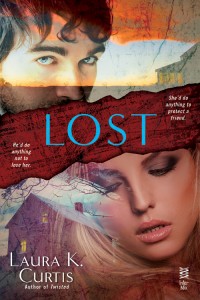
And if a brand new conference I’ve never attended before isn’t enough to stress out about, on Tuesday the 20th, my new book, LOST comes out. I am hoping to find some fun things at RT that I can give away to celebrate, so be sure to check back next Tuesday to see what’s going on!
by Laura K. Curtis | May 3, 2014 | Books, Writing |
 At the Edgar Awards the other night, I was talking to a friend about a debut book that had garnered quite a bit of acclaim a few years ago, but which neither of us had finished. The reason I couldn’t finish the book turned out to be the same as the reason she couldn’t: the author’s political agenda screamed from every page.
Now, this was an agenda I don’t happen to disagree with, but when I want analysis of political or ideological issues, I’ll grab some non-fiction. A bit of bleed-through is unavoidable—I’ve always said I don’t particularly worry about speaking freely online because if you don’t like my thoughts, you probably won’t like my books—but I don’t want to feel as if I am being hit over the head with a blunt instrument.
At lunch today I was seated next to a very nice couple. The service in the restaurant was … somewhat lacking … so we had a long time to chat. I had my notebook out and was writing and I was wearing a sweatshirt that said “Careful, or you’ll end up in my novel.” So they asked if I was a writer, and we talked about that, and then—because sports were on the TV in the restaurant and bigotry in sports is in the news—we got to discussing some political topics. And, it turned out, both the wife and I had grown up in NY, but left to go to college in the midwest. We had both been shocked at what we found in terms of sexism, racism, ethnocentrism, and homophobia. She is younger than I, and I found her experiences depressing—it was ridiculous that I should be the first Jewish person someone met at Washington University in St. Louis thirty years ago, but it’s worse that Northwestern was still segregated twenty years ago.
And, she said, the problem she really faced was that she was not Indian enough for the other Indian students. She fit nowhere.
After we talked, I went on my way and, as it does, my mind began replaying our conversation. I realized that my politics are actually not so far from my fiction as I might have at first thought.
Over the six-month period since Twisted was released, it’s been very gratifying to me to see people, particularly people whose opinions I value, examine it with some approval. Naturally, there was also some disapproval–that’s to be expected! But overall, people seemed to like it. What interested me most, however, was the analysis itself. Not “yay” or “boo” but the fact that people (both those I knew and those I didn’t) seemed willing to discuss it critically.
Twisted is, at its heart, a book about liminality and the powerlessness of those who live on the fringes of society. The murder that begins the book is the murder of a woman who lives on the edge both literally and figuratively—her house is near the woods, she makes her living as a prostitute, she drinks too much. And there are other murders (mostly of women) that are discussed (though not seen, as torture porn is a huge no-no in my eyes) throughout the book, some investigated some not, and the amount of investigation that goes into the crimes is in direct proportion to the victims’ position in society. In her analysis of Twisted, Olivia Waite says:
Of course, we do have all those nameless, faceless victims — rapes and murders and kidnappings, other cold cases that have never been solved, that may not have even been intensely investigated, which form the data constellation that helps our heroes solve Cecile’s murder. This constellation shows us exactly which groups of people are considered disposable in the small Texas town of Dobbs Hollow: prostitutes, illegal immigrants, and Hispanic women, no matter their class.
Well, yes. And although I knew that as I was writing the book, I didn’t realize it showed as much as it does. There is a certain mundane quality to evil that is hard to look at long enough to analyze. Hard to consider. Hard to face without sinking into a deep pit of despair. The idea that more people would commit more crimes if they weren’t worried about getting caught is a horrifying one. And yet, the wonderful thing about crime fiction, as Carolyn Hart said in her Grand Master address at the Edgars, is that it reaffirms for us that good does exist. That, in fact, good can triumph. And when we open a novel of a certain genre, indeed, we know that we will be transported to a place where good will triumph.
This means that every crime fiction novel presents to us, if we look, the exact ideal, the utopia of the author’s mind. In my utopia, there would be no distinction between fringe and center. No one would be victimized. People would be valued for everything they are and not devalued for what they are not.
But if I wrote that world, no one would believe it. So I write the world I see, which is decidedly less pleasant. But I write romance, which means that even though there may be a great deal of darkness, you know that the world of the novel will be better at the end than it is at the beginning.
by Laura K. Curtis | May 2, 2014 | Books, Stuff!, Writing |
Anyone who thinks the life of a writer is glamorous has been watching too many movies or too much Castle. In fact, most of the writers I know who don’t have to leave their house for day jobs or to take their kids to school spend a fair amount of time in sweats or pajamas. Their clothes have coffee stains and wrinkles. Their footgear is more often slippers or socks than heels.
But once a year, for the Edgar Awards, the ugliest award on the planet brings out the beautiful side of the mystery-writing community. Even I stuff myself into fancy clothes and head out for the evening. So without further ado, here are some of the fashions on display at the Edgars 2014:
by Laura K. Curtis | Apr 25, 2014 | Books, Romance, Writing |
I spend a fair amount of time thinking and talking about marketing. (In fact, if you’re going to be at the RWA conference in NJ in October, you can come hear me talk about author branding.) But I like to think everything I do amounts to “truth in advertising.” Your brand shouldn’t be something you “put on,” it’s an expression of who you are. My brand is not just what I write in my fiction, it’s also the types of things I discuss here on the blog, the dog photos I post on Twitter, all the parts of the “social me.”
Your marketing should always be honest. Your cover shouldn’t make promises your book doesn’t keep. If the cover looks like romantic suspense, there should be thrills and chills inside. It if looks like a light, happy beach read, there shouldn’t be dead bodies piling up. If the cover copy (and please note, cover copy is the descriptive text about the plot; “blurbs” are those things where people say “this book is the best thing I’ve read in five years!”) says that the book is a romance, there damned well better be a happy ending.
Back in the days when authors didn’t have a whole lot of personal contact with readers, marketing was a different game. You (which, in those days, meant your publisher) gave clues, tempted and teased, and hoped that when readers picked up a book in the store and paged through it that they’d buy it.
But things have changed. In today’s world, authors meet their readers on Twitter and Facebook and blogs. They actively ask their readers to review their work on various sites. The lines between readers and authors are getting blurred more every day, which is both good and bad. It’s good because I feel—as a reader—that I can more easily tell my favorite authors how much I appreciate their work. And, as an author—certainly as a new author who is hoping to constantly improve her writing—it’s great to be able to hear directly from readers.
But there’s a down side, too, in that, well, not everyone likes my work. And I do have the desire to explain things to them (“but did you miss that she…?”). So that’s hard. And negotiating the author-reviewer relationship is difficult since I was brought up to say “thank you” to everyone and I’ve been told that a number of reviewers/bloggers don’t want to hear that from authors. So it’s problematic. My own solution is to say “thank you” to those I know from social media, and leave others alone.
This new author-reader-reviewer relationship, however, has also created an opening for a far darker and more manipulative form of marketing than used to be possible. Now, a select few authors—and I am by no means tarring everyone with this brush, but there are enough of them out there to make it a “thing”—are posting to blogs, forums, social media about how they are being “bullied,” and therefore they will be forced to stop writing. This leads to a jump in their sales, and a huge outpouring of sympathy, and of course they don’t stop writing.
There are other manifestations of this same kind of marketing, which I think of as “guilt marketing.” Authors post that someone has ripped them off. They post that they need money because of some personal problem or illness and that the best way to help them is to buy their books. (Instead of just giving them money, which doesn’t create a sales jump and thus a ranking jump on Amazon.) They post that haters are writing negative reviews for some specious reason and beg their followers to go post positive reviews to Amazon to drown out the negative voices.
Mind you, I am not saying that these things don’t happen—people do have family emergencies. They do get ripped off. They do have unfair reviews written on occasion. But up until now, that’s never been a problem they expected readers to solve for them.
The real issue is that this is now happening so frequently that it’s pretty clear not all of it is true. Which leaves readers feeling cynical and abused.
Recently, an author claimed that because of poor reviews, etc, she was suicidal and she was going to quit writing, take down her book, take down her page, yada yada yada. She did none of those things. In fact, she recently sent a review site a request to do a “cover reveal” for her new book. Yes, another book after she supposedly had to quit because of the psychological trauma caused to her by the readers of the first book.
Now, if you’ve followed this blog for a while, you probably know that I am a depressive. In fact, a high percentage of creative people deal with depression. I suffer from both epilepsy and depression and I deal with them, just like other epileptics and depressives. They’re part of my life the way, I don’t know, migraines, are a part of someone else’s life. I don’t expect other people to solve my problems for me and I don’t go “I’m going to kill myself because you are all being mean to me” when stuff goes wrong.
In fact, I’ve known a lot of people who have those feelings, and I’ve known those who actually committed suicide, and none of them have thrown that kind of tantrum. People who have depression take the words “I am going to kill myself” very, very seriously. Often, they won’t say them even when they mean them. If they do say them, it’s frequently to only a few very close friends, people they trust to help them stay alive.
Mood disorders affect different people in different ways. Yes, some people may prefer to announce to the world their current state of mind. But most don’t. Not when their current state is as dire as this woman said hers was. And she is not alone in faking this kind of melodrama. I’ve seen this same behavior several times in the past year. And none of these people have actually stopped writing, have actually taken down their sites and disappeared from the Net.
This kind of manipulation infuriates me, not the least because it drowns out the real cries for help that occur on the web. And it’s becoming more and more common. I don’t think there’s anything to be done about it, unfortunately, except for readers to become aware that they may be being manipulated and to proceed with caution.
But still, it pisses me off.
by Laura K. Curtis | Apr 24, 2014 | Books, Romance |
 Recently I had a discussion with some friends on Twitter about “alpha heroes.” Now, you may remember that I have an intense dislike of the “Alphahole,” but there are heroes who are alpha without being jerks.
But let me back up a minute. This conversation began because in a post on Heroes and Heartbreakers, which is a blog that is often a great deal of fun, author Jackie Ashenden wrote a post about what she says are the six types of alpha heroes. I encourage you to go read her definitions to see what you think, but my thought when I read them was “are those guys really all alphas??” Because I’m not so sure they are.
For example, she talks about playboys as alphas. Well, let me tell you, I’ve known some of these guys in real life, and they weren’t the least bit alpha. In fact, lack of alphaness is almost definitional for the true playboy, who’s not going to waste his time on a woman who doesn’t want him when he can move along to an easier target. From television’s current crop, let’s take Rick Castle (in his pre-Caskett days). Playboy? Absolutely. Alpha? Absolutely not.
At the beginning of the post, Ashenden says
I love an alpha hero. Yeah, I know, loving an alpha isn’t so fashionable these days. We want a guy who’s more sensitive, who’s not so in your face or controlling, who’s laid back, who’s a bit more true-to-life even.
But, actually, I think the vast majority of heroes in today’s romances are alpha. In fact, since I don’t always like alpha heroes (they trigger some bad memories for me), it’s often difficult for me to understand the uber-popular books of the moment.
Ashenden also lists the “wounded alpha” as a type, but the way she describes it doesn’t seem particularly alpha to me. When a strong man has a tragic event happen—either physical or emotional—and he basically curls up into a ball and wants everyone to leave him alone, that’s not alpha. He may or may not have been alpha in his previous incarnation, but during the period of the book, he’s not an alpha. The entirety of the narrative may be focused on getting him to the point where he can once again be alpha, but I would argue that he’s not an alpha hero.
But I don’t want to spend all this space on what an alpha is not. I am more concerned with what an alpha hero is.
Let me start with my house. If you could speak with my dogs, they’d tell you that I am alpha. I give the orders. I decide what they can and cannot do. They do not disobey me…unlike my husband, who’s a total pushover. That’s not to say they don’t go behind my back and shred 18 rolls of toilet paper if I happen to leave the pack lying on the kitchen table without putting it away, because they do, but if I say “down,” they go down.
This works because I know what I want and I am in a position to get it.
To me, an alpha hero has two essential characteristics:
- He knows what he wants
- He has the self-confidence to believe he can get it.
Those are, as far as I can see, the two characteristics that are absolutely necessary for a hero to be alpha. Either of those characteristics, taken to extremes, can turn the guy from a hero into an asshole or an abuser, but without either one of them he becomes either beta or unheroic.
And then there is a third characteristic (and my thanks go to Olivia Waite for helping me work through this in my mind), which is more amorphous and harder to define: leadership ability. I think this is an important characteristic, but it’s usually merely assumed in the narrative of the romance. That is, in a military romantic suspense, we might see the hero being a leader. It might also occur in the motorcycle club romances—I don’t read those because they tend to be too alpha-hole for me, so I don’t know—but in a more general sense, we rarely actually get to see the hero being a leader.
Let’s take one of the most popular alpha heroes, the billionaire, as an example. (As an aside, damn, there are a crap-ton of young, attractive billionaires in Romanceland. But that’s another post.) Anyway, we see those guys spending money, attending social functions, riding horses, driving fast cars, engaging in one-on-one competitions in business…but rarely do we see them leading whatever business it is that has brought them their billions of dollars. We assume that they are leaders—after all, how else did they get their big bucks?—but we don’t actually see it. (And, frankly, again, this is fiction. In real life, the super-wealthy don’t have to be leaders. They frequently inherit their money and pay other people to manage it so that it continues to make more money for them. But that’s not a romantic notion.)
In Romantic Suspense, we assume that the law enforcement hero is alpha unless something in the narrative convinces us otherwise, but frequently they’re never shown as leaders because we don’t get to see them working with others. Of course, a moment of logical thought reminds us that this is fiction, not fact. In real life, most members of law enforcement work in teams. And law enforcement is like a corporation in which the vast majority of romance heroes would be considered “middle management.” In order to get around that, we usually see the “maverick” or the “loner” LEO, but that means we don’t get to see his leadership capabilities.
In turn, this results in one of the more problematic areas of romance in general and romantic suspense in particular: when the alpha has to be shown as a leader and the only person he’s in regular contact with is the heroine, he pretty much has to lead her. And that particular dynamic is uncomfortable for me as a reader.
When we were having our Twitter conversation about alphas, someone said (and I am sorry I don’t remember who) that she thought many readers use “alpha” as code for “what I find hot.” That is, any hero, regardless of his characteristics, becomes an alpha hero in the mind of the reader who finds him attractive. I think that to a certain extent that’s true, but I also think it’s a shame. Because the classification of types is useful in that it gives us a common vocabulary, which is necessary to any kind of genre analysis.
by Laura K. Curtis | Apr 12, 2014 | Books, Writing |
I’ve been thinking about my own work lately and I realized that I have something in common with Disney: a whole lot of motherless heroines.
In Twisted, her mother’s murder is the major event in the heroine’s life. That’s not giving anything away, as the book’s cover copy reads:
Lucy Sadler Caldwell is a successful true-crime writer. But the one story she’s never been able to come to terms with is the murder of her own mother–until now. She’s returned to Dobbs Hollow, Texas, the hometown she fled seventeen years ago, to finally expose the real killer.
Tara, the heroine of Lost, which comes out in May, is also motherless, though not for the same reason. Her mother’s death isn’t even mentioned in the book. (It’s actually mentioned in Twisted, though just in passing.)
Evie, the heroine of this summer’s Toying with His Affections, was raised by her aunt and uncle after her mother’s death by aneurism.
I have two more books in mind, and in both the heroine’s lack of parents is key to the story. It’s not as if the deaths need to be violent because they’re not inciting incidents for the action of the story, but they are necessary. So for the foreseeable future, I won’t be working on anything with mothers in the picture.
Now that I’ve noticed the trend, I have some suspicions as to why I am so obsessed with motherless adults even though my own mother, thank goodness, is alive and kicking. (And I mean that literally–she goes to the gym more often than I do!)
But now I am beginning to wonder…can I write a heroine with a mother in the picture? Do I even know what that woman would look like? I don’t write YA or NA, and my heroines tend to be late 20s to early 40s, so it’s not as if they’re living with their folks. You’d think I wouldn’t be so busy eliminating perfectly acceptable parents. I mean, why can’t my heroines just call their moms in another state once in a while the way normal adults do?
So I am determined that I will write a heroine who has some kind of relationship with her living mother. Good, bad, it doesn’t matter. The mother just has to still be around. But it won’t be for a while.