Wheee! It’s a New Cover! Scruffy FTW!
Just got the cover for my upcoming book, LOST, which comes out May 20!

What do you think?
Just got the cover for my upcoming book, LOST, which comes out May 20!
What do you think?
 I’ve just made my reservation for this year’s RWA conference. (Thieves, don’t worry, my husband will still be at my house and my dogs will be with him!) I love RWA. Not the organization, which has all the flaws and weaknesses inherent in any large group, but the conference. I’ve said it before and I’ll say it again: if you have limited funds for promotion/marketing, you should go to a conference. It will be more expensive than any other form of marketing, but it will put you in touch with all the people you need to know.
RWA is my vacation as well as my professional networking conference. It’s when I get to see the people I can only chat with online the rest of the year. It’s the one place everyone understands my obsessions and fears.
If you’re thinking about going and you’re not sure whether you’d fit in at a conference, here’s my post on how to deal with conferences: The Art of the Con. The fact is, most conference attendees are very friendly. It won’t take you long to find a group to hang with. If you’re really nervous, find someone to go with you. Make it a vacation as well as a career item.
Are you going to any conferences this year? I’ll be doing RT, Bouchercon, and, of course, RWA. Will I see you?
 A long time ago I gave up making New Year’s resolutions and switched over to giving myself goals. That may sound like mere semantics, but the two things seem fundamentally different to me. A resolution is a destination; a goal is a journey. If I make progress on my goal, I can count that as a win whereas all I can do with a resolution is fail. I mean, I suppose I could succeed, but I haven’t yet. It’s like the year my roommate and I tried to give up complaining for Lent and lasted three whole days. I mean, what are you supposed to do when you can’t even complain about not being allowed to complain?
So no more resolutions. This year I have three goals:
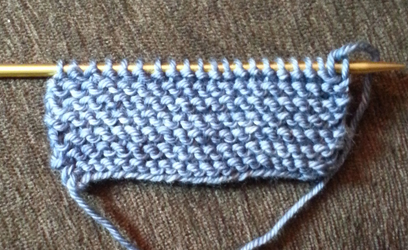
I tried learning to knit from books and with a pattern and the pretty yarn the lady at the yarn store assured me I would be able to do, but she totally overestimated my capabilities. I can crochet like a fiend, but knitting seems to be beyond me. So I decided to take an online class at Craftsy. We’ll see how it goes!
What are your plans for 2014?
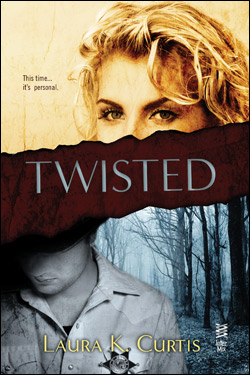 Is your family driving you crazy? Do you need to get away? Take a trip to Dobbs Hollow, Texas, where bodies and villains are piling up…
Lucy Sadler Caldwell is a successful true-crime writer. But the one story she’s never been able to come to terms with is the murder of her own mother–until now. She’s returned to Dobbs Hollow, Texas, the hometown she fled seventeen years ago, to finally expose the real killer.
After a bullet took out his knee in Houston, Detective Ethan Donovan found himself without a lot of options, which is how he ended up as Chief of Police in Dobbs Hollow. Lucy sure isn’t asking for his help–she’s not big on trust–but he can’t help feeling a strong desire to come to her aid.
And though Lucy is armed to the teeth, she will need all the help she can get. When she starts digging into the past, she unearths a psychotic killer who will stop at nothing to silence her forever…
I am giving away two copies of the ebook of Twisted. Just comment below with the ebook format you prefer and be sure to include an email or twitter address so I can contact you if you win! I will pick winners on Wednesday, December 18!
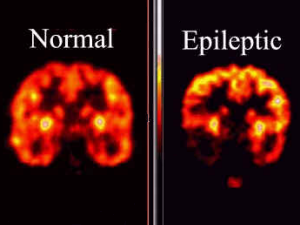 Recently, I read a contemporary romance with an epileptic heroine. I’m not going to name the book/author because I don’t want to make you think this is all about her or just this one book. Although that book triggered this rant because I deal with epilepsy myself, the problem is a common one.
The heroine’s name is Faith, and the information we know about her as an epileptic can be summed up in three points:
These are all points of information we’re given so that we know she had an uncontrolled seizure disorder for a minimum of 7 years. We also “see” her have a seizure as an adult, but we’re told that’s because she didn’t take her meds for a couple of days because she ran out. (More on that in a minute.)
Now, let me first say that I didn’t expect this heroine to have the same experience of epilepsy that I have had. People with disorders, illnesses, disabilities are not monolithic, which is precisely what makes them interesting. I was eager to see what kinds of choices the author would make for Faith and her family. Because make no mistake, no matter what your experience of epilepsy, it affects family even if you don’t contract it until adulthood; when those having seizures are children, it’s worse. Especially if the seizures cannot be controlled, which seems to be the case with Faith’s.
And I say “seems to be” because we’re never given any insight into how Faith, or anyone else in the family, has dealt with her epilepsy. Someone with as many seizures as she seems to have had would never be allowed, for example, to swim without a trained lifeguard. And she’d have been a LOT more interesting as a character if when talking about how she’d gone swimming in the lake as a kid she’d explained that she’d had to sneak away to do so since she wasn’t really allowed to swim just with other kids. But the author didn’t say that. She just blew off all the safety concerns–and legal concerns–associated with seizure disorders. Faith does all the stuff every kid does, including babysitting.
We never know how old Faith is when she finally gets her epilepsy under control. But the assumption is that she does have it controlled at the beginning of the novel since she’s driving around with nary a care in the world.
So here she is, this heroine that I am supposed to identify with. And she doesn’t bother to refill her prescription, so she has a seizure. And, given her father’s reaction, it isn’t the first time. And I sit there and go…”REALLY?” Seriously. If this had been a paperback, I’d have thrown it. But it was on my Kindle and that’s too much money.
 Because while some people are non-compliant with their meds, those people are rarely allowed to keep their driver’s licenses. They’re also frequently suffering from some other major disorder like depression (which, by the way, is extremely common in the epileptic population, so it’s worth paying attention to if you’re writing an epileptic character–she doesn’t have to be depressed, but chances are she has some emotional issues or has been through therapy). People who are as well-adjusted as Faith is portrayed don’t simply take a couple days off life-saving medication because they’re too busy to pick up their refill. What would happen if she were driving when she passed out? She’s portrayed as being almost goody-two-shoes, but someone who really cared about others wouldn’t behave that way.
And even if your prescription runs out, pharmacies–especially a pharmacy in a small town where everyone knows you and knows you have seizures–will give you a couple of pills to hold you over until your doc can call in a new one. This isn’t true for all drugs, of course, but anti-convulsants have very little street value.
I was diagnosed with epilepsy in 1984. A friend of mine was diagnosed last year. We were both told the same thing among the first directives: no booze. None at all until your seizures are controlled, and once they’re controlled, a glass here and there is fine, but enough to give you a hangover is enough to give you a seizure (basically, a hangover is your body withdrawing from alcohol, and it lowers your seizure threshold dramatically). And yet…Faith drinks. She gets buzzed on martinis. She takes a bottle of wine out of a party to console herself mere DAYS after having her seizure.
Let me be clear: I have no problem with an epileptic character who drinks. But for goodness’ sake, make her self-aware enough to understand what’s she is doing. It’s like the swimming. I just want some sense that the author hasn’t simply co-opted the “useful” parts of a complex and often devastating disorder as plot devices.
I don’t consider my life all that different from the lives of people without epilepsy in the grand scheme of things. I take a couple of pills a day, every day. I carry extras in my purse. I have little packets in my suitcases just in case I forget to pack them or they fall out of my hand luggage. Every couple of years, I get an EEG. My drugs are expensive, so I pay higher insurance premiums to get better coverage for them. But overall, you could write about my daily physical life without me looking much different from any other character in your book.
But you couldn’t write about my emotional life–and that’s what romance novels are supposed to be about–without paying heed to things like the way the drugs make me fat and tired and how that’s made me feel. Or the way that other drugs have made me lose my memory and my hair. Or the way that even though my seizures are well-controlled, I still look up every time I hear someone ask “are you okay?” and check to be sure they’re not talking to me.
There are things I cannot control, and I know I cannot control them, and I am reminded of the fact that I cannot control them twice a day every day when I take those pills. No, I don’t think about it that way, but if you imagine for even one second that it doesn’t affect me, that I am not aware of it, you’re wrong. Regardless of what her experience of epilepsy is, every epileptic has a relationship to her disorder that is just as important as any other relationship in her life. (And, like any other relationship, it’s apt to change over time.)
And that’s true of any disorder, disease, or lasting injury, not just epilepsy. If you want to write an epileptic character, I’d be happy to talk to you about my experiences, my friends’ experiences. I can direct you to forums with people who will talk to you. If you want to write this stuff, for goodness’ sake, research the emotional impact, not just the physical symptoms and jargon.
Don’t make me throw my Kindle, and don’t co-opt my disorder for your plot device.
 Today, I have a guest on the blog! I’ve followed KT Grant (@katiebabs) on Twitter for ages, but recently met her in person at a conference in Rhode Island. We had a great conversation about cliffhanger endings and I asked her if she’d like to write about them for you guys. I’ll be giving away her most recent erotic romance, The Gate at the end of the post.
As a reader I’m a big fan of the cliffhanger ending. This usually happens in a book series, where one of the ongoing stories continues into the next book. Sometimes a cliffhanger can be small and not that shocking. Perhaps a character hasn’t made a decision about something, or a certain plot is unresolved. Some cliffhangers can be jaw dropping shocking, just like the one cliffhanger for Suzanne Collins’ Catching Fire, the second book in The Hunger Games trilogy. Two of my all time favorite cliffhangers that had me wanting to tear my hair out is the heart breaking emotional one in Paullina Simons’ The Bronze Horseman or the, “oh no she didn’t!” Carolyn Crane pulled in Double Cross, the second book in The Disillusionist Trilogy. JR Ward always has some sort of cliffhanger in her Black Dagger Brotherhood series or rather I should say the “to be continued…” device that I’ve noticed more authors use instead of an old fashioned cliffhanger.
Back when I outlined The Gate, the first book in the Dark Path series, I knew the end of this book would be unresolved. My plan wasn’t to have a traditional cliffhanger. I treated it as more of a “to be continued…”, which is used on television, usually when a show goes on hiatus for the summer, and the audience has to wait until the fall on how certain stories would be resolved. In some cases, the story would continue with no solution in sight, or create new unresolved stories to keep the viewer interested. The very popular show, Lost that aired on ABC is a perfect example of having a cliffhanger at the end of every episode. Each week I would end up screaming (a few times I threw something at the television) because there was always a, “to be continued…” for some storyline or character. Even the series finale left some questions unanswered, to the dismay of the viewers.
The Gate has two continuous storylines, featuring five characters, which will span the entire series. The main storyline is that of Max, the millionaire media mogul who owns The Gate, a BDSM sex club, and his on again, off again romance with Erika, a sweet and sometimes naive woman who writes children’s books. There’s Chris, the man Erika has had a long time crush on and once fantasized about marrying. Chris and Max are bitter enemies who want Erika for their own purposes. Then there’s Catherine, Max’s best friend and partner in The Gate, and her relationship with Bryan, a twenty-one year old virgin who turns to her to help heal his inner demons be introducing him to what some may feel are questionable sexual acts that Catherine is skilled in. Since I’m planning on writing four books in this series there’s a good chance I’ll have a “to be continued…” at the end of each book.
Why would I do such a thing? An obvious answer is that I want to keep readers coming back for more. But there’s always a possibility that I may give one of the characters an HEA earlier than planned.
In the immortal words of Carolyn Keene, author of the Nancy Drew mysteries: “Do act mysterious. It always keeps them coming back for more.”
Are you a fan of cliffhangers or “to be continued…”? Do you hate them? What are some of your favorite book cliffhangers?
KT Grant is a self-proclaimed eccentric redhead who not only loves to read a wide variety of romances, but also loves writing it. Under her alter-ego, she is a well-known book blogger who doesn’t shy away from voicing her opinion. A proud native of New Jersey, KT is multi-published and writes Gay, Lesbian and Straight romance. KT has been a top ten best-selling author at Amazon, as well as being a multiple All Romance Ebooks best seller and a Night Owl Reviews Top Author Pick.
You can find KT at these fun places: