by Laura K. Curtis | Jul 16, 2014 | Books, Romance |
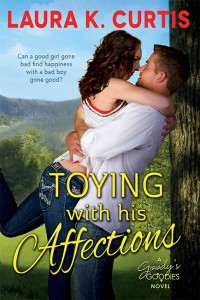 I’ve said it before and I’ll say it again: It takes far more to interest me in a self-published work than in a traditionally published one. I know that my own self-pub work, Toying with his Affections, which came out today (woohoo!) will face the same struggle for eyes and for legitimacy. Even authors whose traditionally-published work I enjoy have to start over when they begin self pubbing because I’ve been burned too often by going “Oh, so-and-so has a new book out!” and then finding out it’s poorly edited or has no discernible plot or whatever.
There are gazillions of self-pubbed books out there. Seriously. I couldn’t begin to try them all. And there are a lot of subgenres I don’t read, so for those you’ll have to find another place to recommend books to you. Even books by some of my friends I have bought and have sitting on my Kindle or iPad and have not yet read (so sorry, Lexxi Callahan and Penny Watson, I promise I will get to them before the end of the summer, but things have been madness)!
So first off, I don’t read much historical at all. I know there are some great self-pubbed historical romance authors, but I just don’t read it, so I can’t help you out. Likewise paranormal. But here are some things I have read and do like:
ROMANTIC SUSPENSE:
You know that would be first, right? There are two authors in this genre I think do a great job with their self-pubbed work.
Crane has several books ranging from short stories and novellas to category length fiction to single-title. I am always happy to see a new one…like today!

Rachel Grant’s Concrete Evidence was probably the first romantic suspense self-pub I read strictly on recommendation (that is, I hadn’t read something she traditionally published or met her at a conference or anything). I still think it’s the best of her books, but I’d recommend any of her first three.

CONTEMPORARY ROMANCE
Oh, these are beautiful. I wouldn’t glom, because the themes can get a bit repetitive (hero falls first, chases heroine) but the writing is lovely. The Chocolate Kiss is my favorite because of the hint of magical realism, which is always something that tends to draw me in.
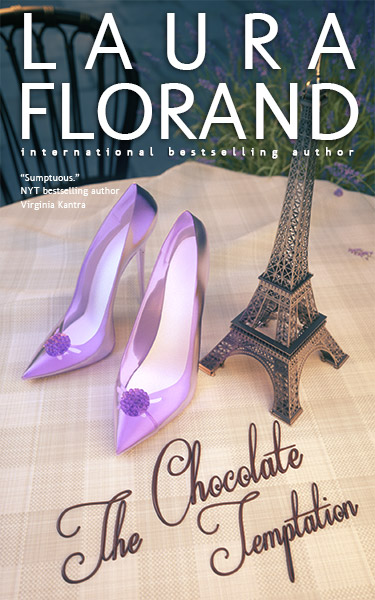
[edited to add: Actually, I’d forgotten that The Chocolate Kiss was one of Florand’s books that came from Kensington, a traditional publisher. I mix up her self-pub and traditional books, which is to her credit. So for self-pub, try The Chocolate Temptation instead.]
ODDS AND ENDS
And then there are the books in genres I normally don’t read that I’ve picked up because they were written by people I knew from their traditional publishing careers or because I met them at a conference and liked what they had to say about the world.
I picked up Quinlan’s Wreckless for my niece. People sometimes mistake these books for being NA, but they’re definitely not. They’re YA and totally suitable for my 12-year-old niece to read. I haven’t read her other books, but I did read this one before I gave it to Leyla and it was sweet, well-written, with enough humor to make it good for a kid who’s still figuring stuff out.
2. K.M. Jackson‘s Bounce: Women’s Fiction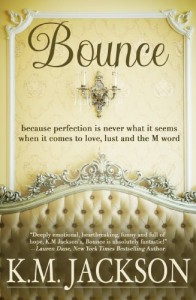
I don’t read women’s fiction. I especially don’t read women’s fiction with infidelity. It’s a giant line in the sand for me having less to do with how well stories are written than with my own personal history. But reading is an intensely personal experience, so everyone has lines in different places and no one will like everything. I admit that I did not read Bounce too carefully for precisely these reasons—I did not want to get overly involved with the characters. But I know Kwana, so I skimmed through it and I liked what I read. It got excellent reviews, so I feel certain that if those are no your particular issues, you’ll enjoy it!
And, finally, two westerns, one historical and one contemporary, both of which I bought because I like the authors’ traditionally published work:

I am absolutely sure I have left people out, but you have to start somewhere! So what about you? Do you have favorites in the indie publishing world?
by Laura K. Curtis | Jul 14, 2014 | Books, Freebies & Giveaways, Romance, Stuff! |
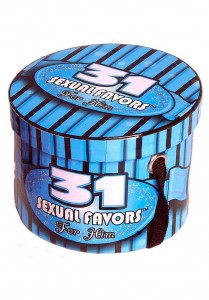 In Toying With His Affections, the heroine, Evie, sells sex toys for a living. She works for a fictional company called Goody’s Goodies that has both retail outlets and a home party arm. Now, before I started writing this book, I knew very little about sex toys. I knew the basics, but not how wide a variety there were, nor that home parties for such a thing even existed.
So, naturally, once I’d decided to write a sex toy story, I had to do research. Which meant hosting a party of my own and conning my friends into inviting my friends to attend. We had a great time. I highly recommend the Passion Parties folks to give you a bunch of good laughs, even if you think sex toys aren’t your thing.
Anyway, I bought several things at the party, some just for me and some to give away as promotional items. Today, I am giving away “31 Sexual Favors for Him.” It’s a set of cards that you can give to someone (or several someones, if that’s what you are into) like little coupons to brighten his day.
As usual with Rafflecopter raffles, don’t forget to CLICK THE BUTTON showing that you’re a member of the mailing list or that you’ve left a comment, or the entry won’t count!
a Rafflecopter giveaway
by Laura K. Curtis | Jun 21, 2014 | Freebies & Giveaways, Romance |
 Last night I posed a question on Twitter. I wanted some recommendations for books that had romances in them but had a literary fiction tone. There was some back and forth on what literary fiction is, as one would expect, but I thought I would post the list of recommendations I received. In no particular order, here they are (links are Amazon affiliate links):
Authors whose works were recommended but without specifying which works:
by Laura K. Curtis | Jun 17, 2014 | Books, Romance, Writing |
Many of you know I will be publishing my first contemporary romance this summer. This is my cover. Isn’t it pretty? And here’s the cover copy:
Good girl gone bad…
Evie Bell couldn’t wait to get out of the small town that had labeled her a goodie two-shoes growing up so she could let out her more daring side. Selling sex toys might not have been the career she envisioned when she left Fairview, TN, for Las Vegas to become a showgirl, but she’s proud of her hard-earned success. Now, forced to return to the town she’d hoped never to see again to care for her ailing aunt, she will need every bit of that pride to get along with those who disapprove of her way of life.
Bad boy gone good…
Griffin Barstow was given a choice at eighteen: jail or the military. He chose the military. Now he’s come home to Fairview to run for sheriff. But small towns have long memories and the last thing he needs while trying to convince voters he’s turned his life around is an attraction to a completely inappropriate woman.
Evie would like to avoid Griffin entirely, but her aunt’s store is in trouble only the law can help her solve. And when sparks begin to fly, both will have to decide whether a future together is possible given the issues of the past.
The thing about self-pub is that you get to experiment with a wide variety of things like pricing, sales outlets, advertising…you get the idea. One of the things I want to do with Toying with his Affections is to try some different ways of selling it. Yes, it will be available in all the standard places and in all the standard formats. Yes, you’ll be able to get it in paperback as well as e. Yes, I hope to be able to get it into library systems so that you’ll be able to get it free.
But it will also be available on my Storenvy store, which gives me the ability to send coupons. So my intention is to send out a coupon to everyone who signs up for my newsletter which will allow them to buy the book in the format of their choice for half off the cover price ($3.99 in either epub or mobi, $11.99 in print) for the first two weeks the book is on sale. The only way to get the coupon is to sign up for my newsletter, which I ONLY send out when I have books coming out, big news, or freebies I think my readers would like.
So sign up today, and be the first to get the new book…and get it at half price!
by Laura K. Curtis | Jun 14, 2014 | Books, Romance |

from Jack Spade’s flickr: https://flic.kr/p/4fy9Je
In one of those weird coincidences, my tweetstream and my email box are full of the same thing today: discussions of relationships and sexuality.
It started with an article that was, I think, meant to be a puff piece to shine a light on women who write male/male romance. The article was a disaster and the quotations from the authors were..unreal. So unreal that many suggested that the authors had been misquoted.
But here’s the thing: as bad as the comments were, none of them surprised me. Let me sum up the reasons these women were quoted as saying they wrote m/m instead of heterosexual romance:
- In a m/m romance, both characters have equal power
- Women are nasty, game-playing, underhanded, and “bitchy”, whereas men are straightforward
There’s some other stuff, too, but those are the biggies. And no, neither of those surprised me because I’ve never actually made it through a male/male romance. I am pretty sure most of the ones I tried were written by women. One was written by a man—a man I know and like—but the writing was bad and I couldn’t get more than ten pages in.
The books that were written by women share one thing: they completely fetishize men’s bodies and men’s relationships. It gives me the same, skeevy feeling I get when men catcall women. There’s a peculiar insistence in them that all men are the same. They are more straightforward than women. They relate to each other a certain way. They are physically and emotionally strong, but always, always scarred. And once you get underneath that scarring, they’re mushy-centered. (I’ve solicited recommendations on Twitter from some people whose opinions I trust…if you’re looking for something to read, try this list at Dear Author for starters.)
In my conversation with my friends on Twitter about m/m romance, one of them mentioned that she found her cisgendered gay male friends still very “male.” I wouldn’t say that was my experience. And then, in an act of complete synchronicity, a couple of hours after that a friend emailed me with the following:
The funny thing about living where I am is that almost everyone around here thinks I’m straight. […] What’s interesting about this from a social science experiment perspective, is that I never realized how much men really ARE pigs! When they think you’re another straight guy, they talk to you much differently.
If I’m outside chatting with someone in the smoking corral, one of the guys will inevitably make some remark about a woman’s chest, legs, or ass after she walks by.
Now, I know a lot of guys. Both gay and straight. I know men deeply in denial about their own sexuality, and ones who put it all right out there, loud and proud about the number of partners—male or female—they’ve had. I know some guys who comment about women who pass by. They’re not my friends. They’re guys I’ve worked with or my husband works with. In the area my friend B is living, apparently a lot of guys behave like this. But not all of them.
So I asked B if he were out with a gay male friend and he saw a hot guy, would he comment? Here is his response:
No, and no one I know has ever done that, which is what makes this so interesting.
What I have done with others is usually have a chuckle because a gay guy who’s really cute will carry himself in a “yes, I know I’m beautiful” way in front of other gay guys.
It’s an entirely different social interaction.
But just before I hit ‘send’, I remembered years ago I was with a friend in a department store, and he commented “that one looks tossable, eh?”, after some cute guy had lingered for just a brief moment too long in the aisle where we were, so his comment had been precipitated by an action by the other guy.
Now, I imagine that despite my friend’s experience there must be some gay guys who look at others as objects. I’ve sat with gay male friends and had them go “hubba hubba” to me when a particularly hot guy walks by. But now I wonder…do they do that only with their straight female friends and not with other gay guys? These are things I’ve never wondered because…well…I don’t really think that much about my friends’ sexuality. (The one exception being those friends who were miserable due to denial of their own sexuality or unhappiness with their sexual preference.)
 So I started thinking about how I would even begin to write a m/m—or, for that matter, f/f—romance. What did I think was fundamentally different about a relationship between two men or two women versus one between a man and a woman? And, really, I couldn’t wrap my head around internal political differences. That is, within the relationship, the lasting m/m and f/f relationships I’ve seen look pretty much the same as the relationship my husband and I have.
Externally, the pressures a same-sex couple face are definitely different. I recall, for example, my sister’s absolute panic when she had a gorgeous baby girl. “What am I going to do?” she wailed, “I have no idea how to help her deal with boys!” We live in New York, where it’s not such a big deal to be a same-sex couple, but even here it’s not the same experience as being in what is still considered more “normal.” So, yes, I can see how the external conflicts the couples might face could be different. But would the relationship itself be different? How would those external conflicts reflect into the relationship?
I went back to that article and saw that one of the authors had posted a reply on her own blog. I realize she was trying to make it better, but as far as I could see, she made it worse.
The fact is, in an urban fantasy world or a fantasy world, heroines can have equal social heft with heroes, and they can look their heroes in the eyes and be taken as dead equals in any circumstance, because the rules of the fantasy world can give them that.
The same cannot be said for the rules of the modern world.
So the answer is not to write strong women? She goes on to assure us all that she’s not a normal woman in a normal relationship.
Now, when my husband made much more money than I did, it made sense for me to [be the primary caregiver for the children]. We both agreed. It only made sense. But now that we’re equal wage earners? He doesn’t let me freak out about the house. He spends as much time caring for the children as I do. Why? Because we both agree that we’re equals– not just as wage earners, but as life-partners. If I ever make enough money for him to quit his job or take fewer hours to take care of the kids, we’re both all over that.
Now imagine if I tried to write that female character into a romance. Or that male character. Selling that partnership to an agent or a publisher would probably get me kicked out of the romance department and right into literary fiction–but that’s not what I want to write!
Ummm…no. And not just no, but hell no. I disagree with this on just about every level. Every long-term relationship requires negotiation. And maybe if you hadn’t read a romance in 20 years, or if you only read a very specific subset of category romances, you might believe that none of that negotiation takes place between the pages of a romance novel. But right off the top of my head I can name half a dozen contemporary authors for whom these issues form some of the major points of their work. (Victoria Dahl, Roxanne St. Claire, Cara McKenna, Lisa Jackson, Molly O’Keefe, Suzanne Brockmann. Oh, right—and me.)
Do all romance writers write about the struggle to negotiate a happy place in a relationship? No. But I’ve said before that I find the ones who pay at least some attention to this more satisfying.
Here’s the thing: all relationships are unequal in one way or another. Even romantic relationships between men. For example, one couple I knew in grad school had incredibly disparate incomes, but J, who made considerably less money was completely out and no one in his chosen career cared. His partner, M, made a lot more money, but didn’t have nearly as much freedom, and referred to J as his “room-mate” when around colleagues from work.
So…were they “equal?” Because that’s the main thrust of why women seem to believe m/m romance is “better” or “more fun” to write. Because the characters are “equal.” (I would imagine that gay men write m/m romance for the same reason I write m/f romance—it’s what they know.)
I hate to break it to those female writers of m/m romance: no two people in this world are equal. Especially in a relationship, there is never true equality. And it has so very, very little to do with money. It often has very little to do with social position. In my own marriage, for example, though I make a good deal more than my husband does, my health is appallingly bad and he is often in the position of literally taking care of me. He is romantic; I am practical. He’s an idealist; I am a cynic. We negotiate every single thing. Home repairs? Negotiation. Vacations? Negotiation. Puppy care? Negotiation.
Every relationship is different. Every one. Think about how you relate to your parents versus how each of your siblings does. Or how your siblings relate to each other. Or how your children relate to you. Or to each other. Relationships are complex and constantly changing. The idea that this kind is better, inherently more interesting or more sexy or more honest than that kind is patronizing and flat out wrong.
So, what do you think? Are there internal differences in homosexual versus heterosexual relationships? Can you think of books that show them well?
by Laura K. Curtis | Jun 8, 2014 | Books, Romance, Writing |
When I tell people that I’ve never written a query that didn’t result in a request for pages, they can’t believe it. When I tell them I ever sent out three (or six if you count the random assignments I was given to pitch to at conferences) queries, they are shocked.
But here’s the thing: I researched before I sent out my original set of queries. I looked not only at who represented what (which you can generally find on websites) but who sold what (which you can find out on Publishers Marketplace). I don’t care if an agent loves historical romance, if every sale she’s ever made is paranormal, she is probably not going to have the right set of contacts.
Because I belong to RWA, MWA, and Sisters in Crime, I am involved in a lot of discussions about queries. And I can also say that any query I’ve ever edited for someone has also resulted in a request for pages.
Your query is a super-important piece of writing. If you’re looking for an agent or editor, it may be the only piece of writing the people you want to take you on ever see. If you’re self-publishing, think of it as your cover copy—it’s the thing that’s going to make readers pick up your book.
A query letter has some basic pieces, but the one most people get wrong is the part that is like cover copy, the part that hooks an agent or editor and makes them want to find out more. Because that’s the trick—it’s not a synopsis that gives away everything in your book, it’s just a taste, a tease, a tempt.
This section needs to have three things and virtually nothing else:
- Setting
- What keeps the characters apart
- What keeps the characters together
I’ve included setting here because setting often has bearing on not only the goals and conflicts, but also on the subgenre. Someone who is looking for a small-town contemporary romance is not looking for an urban werewolf romance. You don’t need to describe the setting, just let me know where and when this takes place. The one exception to this is paranormal: in paranormal, you need a bit more world background. If your world has demons crawling up from the sewers, I need to know whether people are aware of them or not. Your world is a character, and it needs the bones sketched in.
What keeps the characters apart is vital, but I don’t have to know the details. For example, “When Molly’s fiance left her for his paralegal, she decided to stick with battery-operated boyfriends for the rest of her life.” Fine. I don’t need more. I don’t need her ex’s name or any of the details of their breakup. I don’t need to know that her father also left her mother—it will add character depth in the story, but it doesn’t need to be in the query. But let’s put Molly somewhere:
When Molly France’s fiance left her for his paralegal, she moved out of his Seattle apartment and back to the home where she grew up on Vashon Island with a chip on her shoulder and a suitcase full of battery-operated boyfriends to remind her not to trust any man. The old farmhouse, however, is in a bad way, and if she intends to use it as a home base for her new app-designing business, it’s going to need a lot of work. [OK, it’s not elegant, but I am making up as I go along, here.]
Now we have to give her a guy. He can either want her or not. Doesn’t matter, because her trust issues are enough to keep them apart.
Patrick Green has been trying to get off Vashon Island forever. Carpentry is all he knows, and saving sufficient funds to get a business off the ground in the city isn’t easy.
OK. Now, look, these two have nothing in common except that they live on the same island. If I am reading along in your query, I can see the conflict, but I don’t see any reason why he wouldn’t just ignore her completely, or why she wouldn’t just hole up in the farmhouse and nurse her wounds while looking for a job.
So we need to get them together, and keep them together. So…
Patrick Green has been trying to get off Vashon Island forever. Carpentry is all he knows, and saving sufficient funds to get a business off the ground in the city isn’t easy. When Molly first hires him to work on her house, all he sees is a path of dollar signs leading to freedom. But as passion flares between them he faces a difficult decision: will he give up the future he’s always wanted for the woman he’s beginning to love?
OK, like I said, it’s rough. But see how it sets up the situation without too many details? I don’t need to know that Molly has been working out of her boyfriend’s apartment in downtown Seattle for three years. I don’t need to know that Patrick’s parents died when he was nineteen and he’s had to take care of his siblings until this year. I don’t need the flesh of the story, just the bones. The bit that makes me go “yeah, let me see whether I want to read a few pages and see if I like the author’s voice and style.”
This is NOT a particularly good query, as far as I am concerned. Because it sounds to me as if the story is a bit empty. That’s because I haven’t written it yet and I am a pantser so I can’t write a query until after I’ve at least started the story.
Anyway, if you’re editing your own query, check and see whether you’ve hit those three points…and good luck!
 I’ve said it before and I’ll say it again: It takes far more to interest me in a self-published work than in a traditionally published one. I know that my own self-pub work, Toying with his Affections, which came out today (woohoo!) will face the same struggle for eyes and for legitimacy. Even authors whose traditionally-published work I enjoy have to start over when they begin self pubbing because I’ve been burned too often by going “Oh, so-and-so has a new book out!” and then finding out it’s poorly edited or has no discernible plot or whatever.
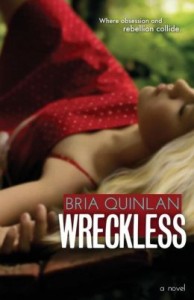 1. Bria Quinlan: YA


