Just For Fun
Head on over to YouTube for the lyrics, which are below the video. This absolutely cracked me up.
Head on over to YouTube for the lyrics, which are below the video. This absolutely cracked me up.
 [This post originally appeared on The Women of Mystery.]
Years ago, I began attending writers conferences. The first one I went to was while I was living in St. Louis, the second when I was living out in East Hampton. In both places I was fairly isolated, far from any other writers. And back in those days—the early 90s—the Internet didn’t exist the way it does now. I belonged to an online writer’s group on AOL and a writer’s community founded by Orson Scott Card, both of which were fun, but neither of which gave me what I really needed.
So I went to my first writer’s conference, which was RWA National in New Orleans. I was painfully shy at the time and didn’t meet many people, and without the whole Internet thing, I’m not sure how much the networking would have helped anyway. But what I did do at that conference was attend the sessions. And I learned. And learned. And learned.
I learned about copyright, about rights, about relationships with editors and agents, and about the business end of publishing. Because I was there, and listening, I heard the answers to questions I wouldn’t even have thought to ask. It didn’t matter that at the time I was writing epic fantasy and this was a romance conference…there weren’t any fantasy conferences I could get to. So I went to RWA and I soaked up all the knowledge.

It’s kind of my motto, and something I tell people a lot: “shut up and listen.” Go to every conference, every convention, every meeting, every critique group, every panel at the library, every professional development thing you can find. Go. And listen. Don’t talk about your book. Don’t talk about yourself. Don’t talk about your career. Just listen.
If people ask you about what you write, by all means answer. But don’t go because you think it’s a chance to promote your book. Go because it’s a chance for you to learn from people who are further along than you are. Go because you can take notes that will help you with your next book. Go because people don’t want to sit down and tell you the same thing they’ve told 100 other people already, so the best way for you to find it out is at the same time those 100 people find out—in a panel. We’re all busy and none of us want 8 million emails cluttering up our mailboxes, but I’ve belonged to crimescenewriter for three years—just so I can go back and search the archives later on when I need them or ask the occasional question. When I can answer a question (like on firefighters and extrication), I always feel a huge sense of triumph because everyone there has given me so much over the years without even knowing it!
This year’s RWA is in July in Atlanta. (I really wish they’d do cooler climates–one year it was in Orlando, and next year it’s in TX, blech.) I was talking to someone recently who said she’s not sure she’ll go because she’s self-pubbing her next book and she’s not on a panel. I told her I think that’s a mistake. True, traditional conferences don’t give you a lot of help for new publishing paths, but they do help you network, and they do help you with craft. And anyone who tells you they know all they need to know about craft is someone whose work I’m not interested in reading.
The other thing about conferences is that they get you excited about writing. Or they do me. Whenever I come home from a conference, I am full of energy. Energy not only for writing, but also for publicizing. All those things that seem to drag at me, to weigh me down, seem lighter and easier after a conference.
And then, there’s the bar.

The bar is where you meet people. It’s where you get to know them, where you laugh, and where—if you’re like me—you come up with ideas for future books. I kid you not. In the bar at the Orlando RWA conference, a short story and a novel were born. It’s where you meet agents and editors and where you make contacts who will help you and support you throughout your writing career. These are the people you will support, too, of course…it all goes both ways!
This is why I tell people to put their real picture as their AVI on Twitter…so that people recognize them in the bar. You never know who might have a project they want to discuss with you.
Remember, genre writing is a community. That’s probably the most important thing you need to remember when writing and promoting your book, and it’s the thing that becomes obvious at conferences. Readers are writers, writers are readers. Those of us who write crime fiction—or romance or sci-fi—we read it, too. We like it, and we’re happy enough to like you, if you give us a chance. But we want to know you and see that you share our love of the genre. We want to see that you’re helping other authors and trying to learn to better yourself, and we don’t want to be sold to.
Lesson the First: Identify and Acknowledge Your Inner Romance Hero
Examining the shelves of the bookstore’s Romance section could give a normal guy an inferiority complex. Billionaire businessmen, Navy SEALs, kilt-wearing, sword-wielding Scottish warriors, and century-old vampires abound. Even demons from Hades seem to have a leg up on their human counterparts in the romantic race. So what’s an Average Joe to do?
Never fear, the handbook is here! Regardless of nationality, socio-economic class, or even species, the characteristics that make a hero irresistible are always the same. Is your hair too thin or your belly too fat? Are your shoulders narrower than a pundit’s mind? No matter what you look like on the outside, on the inside is a Romance Hero just waiting to be born. You just need to find him and set him free.
But how?
Imagine you are that most famous of all Romance Heroes, Fabio. You walk into a famous restaurant. People stare. They whisper. Some even point surreptitiously. But do you care? No, you do not. You are Fabio and admiration is your due. Those who snicker are merely jealous of your success.
Now, shrug off your Fabio skin, but hold the grand and glorious feeling in your heart. Do you recognize it? It’s self-confidence, and it grows out of knowing who you are and how much value you have.
Not so easy, you say? Then we’d better get started!
First, we need to discover which kind of Romance Hero you have inside.
For each of the following historical eras, put an A next to the position you would most like to have held. Then, go back through put a B next to the professions you feel best suit your talents and personality.
Ancient Greece and Rome
Philosopher
Warrior
Politician
Medieval Times
Viking warrior
Scottish laird/warrior
Arthurian knight/courtier
Renaissance Era
Poet/Playwright
Explorer
Pirate
Philosopher
Inventor
17th-19th Centuries
Frontiersman in the New World
Explorer
Pirate
English nobleman
Modern World
Computer expert
Special Forces operative
Cowboy/Rancher
CEO
Politician
Social activist
Look at your answers. The better your desires correspond with your talents, the easier it will be to achieve your goals and unleash the hero within. If the two are always widely different, you can still get there, but the road will be longer.
What does this questionnaire tell you about your inner romance hero? Let’s take a look at your choices. Do your answers lean toward warriors, pirates and commandos? You probably have a great deal in common with romance’s more physical “Alpha” heroes. Politicians, noblemen and CEOs? You’re ambitious and driven, apt to be sophisticated and well-groomed. Explorers, inventors and computer experts have insatiable curiosity. Like poets, playwrights, philosophers and social activists, they’re apt to fall into the more easily approachable “Beta” hero category. These men are some of women’s favorites!
Why all the focus on history? After all, you’re a modern guy and chances are you don’t sit in the House of Lords, roam the Highlands in a kilt, or sail the seas under a flag adorned with a skull and crossbones. But the truth is, even the most modern women like a bit of old-fashioned courtesy in their lives. You don’t have to throw your coat down over a puddle, but you should become accustomed to holding doors, walking on the outside of the sidewalk[1], and seeing your date all the way to her door even when you don’t expect a kiss goodnight.
If you want your heroine to believe the expression of your inner hero and not suspect you of cynical self-interest, your heroism must be real and true, not a costume you put on to impress. In other words, you have to respect not only your heroine, but yourself.
Self-respect may be something you’re not used to. After all, most of us are used to basing our self-image on our jobs and your employment may well be less than impressive. The vast majority of us are worker bees rather than queens and we have a tendency to think this makes us less important. But the fact is, without the worker bee, the human race would die out. Queens give orders, but workers are the ones who pollinate massive fields of grain, meadows of flowers and orchards of fruit. This is the reason biologists are terrified about the fact that bee colonies are dying out.
So imagine, for a moment, that no one was willing to do your job. What would happen to the world? Take the consequences as far as you possibly can and you will see how important your work really is.
For example, let’s say people decided to refuse take jobs in department stores. No retail workers would mean that all clothes would have to be sold online and shipped–often each item individually–to people who would not have a chance to try them on. Every piece that didn’t fit would then be sent back. Manufacturers, foreseeing how many times they’d be paying for two-way shipping on each item, would have to charge more, so lots of people wouldn’t be able to afford the same level of quality goods. Plus, the constant trucking and flying of items across country or around the globe would be incredibly destructive to the environment. Retail workers are saving for the planet!
You also have to remember that even Fabio himself didn’t start out as an international romantic hero and multi-millionaire. Nor did he have the chest, shoulders and hair he has become so famous for. What he did have was potential, ambition, and a willingness to work, and if you have those things then you, too, can become a Romance Hero.
And here we reveal another secret of the romance hero: he is ambitious. He always has a goal in mind. His actions and decisions are informed by his desire to achieve his goals. The key for you, however, is to discover your inner hero’s definition of accomplishment, for every person has a different idea of how success will look.
In Mary Balogh’s historical Slightly Sinful [Dell, 2004], the hero expresses exactly what is so important about ambition and passion.
Even if a man had enough personal wealth to carry him comfortably through life without any exertion on his part, as he did, there ought to be something that fired his blood and elevated his soul.
The hero of Jill Shalvis’s contemporary The Sweetest Thing [Hachette Forever, 2011] also has to challenge and change his lack of drive before he can get the girl:
The next morning, Ford woke up in a rare, foul mood. Tara was right about him. He was easy come, easy go, and he didn’t like what that said about him.
This is a vital difference between men and women, and one you must understand should you wish to become a romance hero: men consider only success itself ultimately important; women consider the struggle to succeed equally vital. You don’t have to be perfect, you just have to aim high.
The third and final quality of all romance heroes, along with respect and ambition, is care for the less fortunate among us. In this aspect, the romance hero is no different from any hero from Superman to the man on the street who prevents a mugger from stealing a woman’s purse. Your inner romance hero will have his own set of altruistic priorities and you need to discover and nurture them.
Even if you are having a terrible, horrible, no good, very bad day[2], never forget that others are worse off, nor that you have a responsibility (as a human being as well as a Romance Hero) to look out for them. Indeed, if you take the time to look beyond yourself, you may find your own burdens lightened (especially if your heroine happens to notice your actions).
A perfect example of this selflessness is Rowland Manning, the illegitimate, desperate, and near-destitute hero of Sophia Nash’s Secrets of a Scandalous Bride [HarperCollins, 2010]. Deeply in debt, with the complete ruination of his business at hand, he worries more about his employees than himself.
He searched desperately for a solution. These men and so many others faced certain destitution. With the flood of soldiers now returning from the battlefields of France and Spain, positions in great houses were scarce. If his enterprise collapsed, where would they all go?
How different from the CEOs making headlines today, with their golden parachutes and less-than-sterling ethics. Never forget that as a romance hero, what you have is far less important than what you do.
Let’s take a minute to check out your priorities.
In the following lessons, you will learn how to let your inner Romance Hero shine through despite any external complications. But for the moment, just remember the three defining characteristics you’ve attributed to him:
Got it? Then let’s move along to the second lesson where we find out how to begin to unleash your inner hero upon the women in your world!
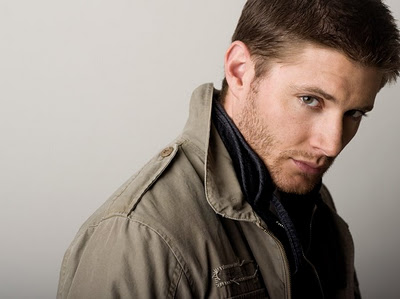
Jensen Ackles (Dean Winchester) of Supernatural
I’m a big fan of The Romance Man. His blog is often hilarious and sometimes poignant… and how many guys out there are willing to jump into the romance pool, read a bunch of romance novels, and only make fun of the ridiculous ones? And even those, he’s gentle with. Mostly. For the same reason, I am a big fan of my colleague Chris, who works with me at Criminal Element and also at Heroes and Heartbreakers.
Still, that’s only two guys reading romances. TWO. And I think the vast majority of men would benefit from reading them.
But I am a realist. I know it won’t happen. I’ve been accused of being ruthlessly pragmatic and even (OMG) unromantic. So if I can’t get guys to read romance novels, how can I help them to become more romantically actualized? Well, I’ve spent a lot of time reading romance novels myself (oh, the pain of research), and I’ve distilled my findings down to ten easy lessons. Well, nine, really, with a summary at the end.
Here are the chapters…I am aiming for one every week or two:
I’d love to get your input, so feel free to shout out suggestions for things the chapters need! Let’s give ’em what they need to give us what we want!
This is a post I wrote about two years ago for Heroes and Heartbreakers.
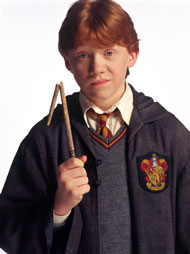 What defines a romantic hero? Does he have to be sexy? Strong? The most important man in the room? Or can he merely be “the one who gets the girl”? If a story has a strong, intelligent heroine, do readers—or viewers in the case of movies—just go along with the heroine’s choice of hero? If you consider the Harry Pottermovies fantasy or adventure, Harry is the hero. But if you consider the cycle a romance, it is Ron who steals the focus.
More than any factor that defines a romantic hero, after all, is that he is brought closer to the heroine by the arc of the story. He may start out less than worthy, but he grows to deserve her. He may not believe he cares about anything or anyone, but by the end she is the center of his world.
Harry never changes. He is loyal, intelligent, caring, and an exceptionally talented wizard right from the start. He is destined for greatness. Interestingly, these are the kind of characteristics one finds in Medieval romances, which are not “romances” in the modern sense, but stories of adventure. If we switch to the modern “boy meets girl” definition of a romance, however, Harry doesn’t fulfill the requirements for a hero.
At the beginning of the cycle, we meet Harry, Ron, and Hermione in quick succession. (Because I’ve recently refreshed myself with the movies in anticipation of the finale, I am going to refer to the movies here rather than the books.) In true romantic fashion, Hermione takes one look at Ron and dismisses him as useless. After all, he messes up a simple spell, something she would never do. She is far more impressed with Harry.
This is a standard genre convention, one so common as to border on cliché: frequently, the hero and heroine dislike each other for any number of reasons at the beginning of a romance. Part of the thrill is watching them figure out they were meant for each other. Shortly after they meet on the train, and after Hermione once again proves her superiority in the field of magic, Ron remarks to Harry that Hermione is weird and has no friends. This completes the founding trope: now she has dismissed him and he has hurt her feelings. Any romance reader immediately recognizes these cues.
It is tempting to go straight to the end of the series to view Ron in his heroic phase, but such extremes are completely unnecessary. Even at the end of the first movie, Ron sacrifices himself in the game of Wizard’s Chess to save the others. And when he does, Hermione stays behind to help him, letting Harry go on alone.
Another convention of romance is the strength of the hero’s family ties. Romantic heroes without families often belong to pseudo-familial communities like paramilitary groups, military units, or tight-knit small towns. In their interactions with these groups, protagonists can show off their heroism without, well, showing off. Both Harry and Hermione are singularly lacking in family—Harry’s parents are dead and Hermione’s are muggles and rarely discussed. Ron’s family is the important one. For all intents and purposes, they adopt both Harry and Hermione. The bond Ron shares with his brothers and his parents is key to seeing that he is good husband and father material.
(It should be noted at this point that another typical feature of the family-oriented romance is a secondary romance featuring some other member of the hero’s family or community. In this case, that honor belongs to Ginny Weasley and Harry. Harry saves her in the Chamber of Secrets, and they end up together, though we don’t see much of the romance’s progression.)
Ron’s heroism is also displayed in his willingness to undertake even those adventures he most fears when his friends ask it of him. Harry and Hermione venture bravely forth into the unknown, often finding themselves overwhelmed and in trouble. Ron, on the other hand, only reluctantly ventures out of his safety zone. Although his terror at first glance lowers our opinion of him, he rises to every occasion and never fails his friends. This is far more impressive than a person whose single-minded focus on a goal allows them to ignore their fears.
And, finally, there are the outwardly romantic aspects of Ron’s journey. He gets involved with a ridiculous girl who makes his life miserable, which leads to Hermione’s first open admission of love. Still, if we are to consider the whole cycle a romance, the couple cannot end up together until the very end. If the couple resolves their differences too early, the end of the story becomes pointless and dragging. So even after Ron ditches the dreadful Lavender Brown, he and Hermione still have hurdles to overcome.
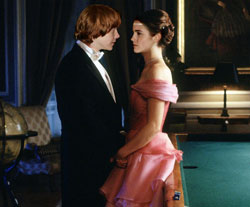 Not the least of these obstacles is Ron’s own feeling of inferiority. This becomes clear in Deathly Hallows, when he storms out of their tent in the woods, leaving Harry and Hermione alone. He is jealous of their relationship, frustrated by his own inability to talk to Hermione about his feelings, and he feels useless in their quest. He returns, however, just when the others need him most, and he is brought back to them by the sound of Hermione’s voice calling to him over the miles.
Ron and Hermione fight together at the end of Deathly Hallows.Together, they retrieve the basilisk fangs needed to destroy the cup Horcrux. When Ron suggests warning the House elves, his selfless impulse and the growing maturity and compassion it evinces allow Hermione to admit her own feelings without reserve.
When we first meet Ron, there is no character who seems less likely to be a romantic hero. Yet, as time goes on, it becomes increasingly evident that Ron Weasley, however unlikely, is the hero of the Harry Potter romance cycle. Not only does he fulfill all the requirements, but in the end, as all good heroes do, he gets the girl.