No, I am not religious, though I was raised in a variety of faiths, but I have always thought this was one of the most beautiful songs in the world. If you recall it vaguely but not completely, here is the poem, written by Henry van Dyke in 1907 to accompany Beethoven’s Ode to Joy, the final movement of his 9th Symphony:
Joyful, joyful, we adore Thee,
God of glory, Lord of love;
Hearts unfold like flow’rs before Thee,
Op’ning to the sun above.
Melt the clouds of sin and sadness;
Drive the dark of doubt away;
Giver of immortal gladness,
Fill us with the light of day!
All Thy works with joy surround Thee,
Earth and heav’n reflect Thy rays,
Stars and angels sing around Thee,
Center of unbroken praise.
Field and forest, vale and mountain,
Flow’ry meadow, flashing sea,
Singing bird and flowing fountain
Call us to rejoice in Thee.
Thou art giving and forgiving,
Ever blessing, ever blest,
Wellspring of the joy of living,
Ocean depth of happy rest!
Thou our Father, Christ our Brother,
All who live in love are Thine;
Teach us how to love each other,
Lift us to the joy divine.
Mortals, join the happy chorus,
Which the morning stars began;
Father love is reigning o’er us,
Brother love binds man to man.
Ever singing, march we onward,
Victors in the midst of strife,
Joyful music leads us Sunward
In the triumph song of life.
I can think of a lot of pleasurable things I would like to spend $1600 on, from techno toys to airline tickets.
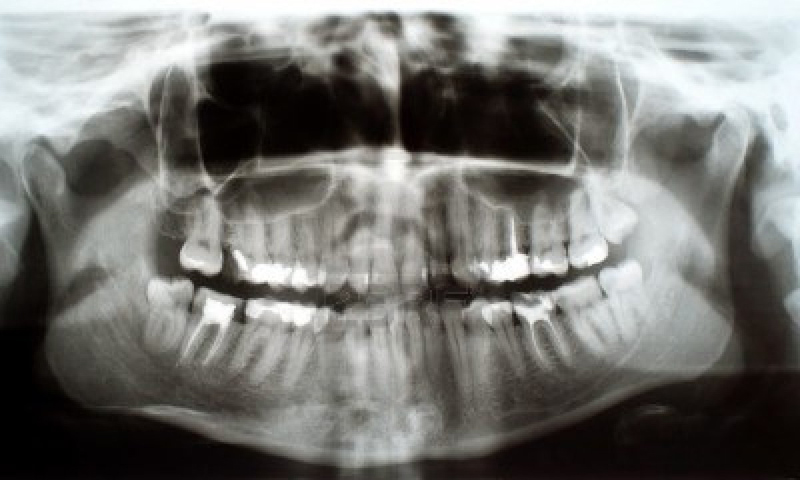
One thing I didn’t want to spend that money on was a root canal. But these are things you can only put off for so long, and apparently I reached the mark.
(No, those aren’t my teeth, that image is from 123rf.com)
Now, mind you, two years ago I spent $1500 on a crown for this freaking tooth. So the running tab for this ONE TOOTH, with the crown and the root canal, is over three thousand dollars. More than my book advance. And I am still not done, since I have to get the crown (which they had to drill through to fix the roots) repaired once the permanent filling goes in.
“Well,” I hear you say, “if you took better care of your teeth, this wouldn’t happen.” But actually it’s one of those little-considered side effects of epilepsy. You have seizures, you break teeth. Cracks happen, as they say.
And, oh joy of joys, the endodontist says I have one on the other side that’s going to need the same treatment. At least that one doesn’t have a crown on it yet. You know why? Because two years ago, when the dentist said it needed one, I could only afford to do the right side, not both the left AND the right side.
So, yeah, I guess there some benefits to putting stuff off. Procrastinators, that one’s for you.
Today I was reading a post over at Myke Cole’s blog on What PTSD Is in which, among other things, he says “I wouldn’t be surprised if there are more than a few folks still pushing air past their teeth because of a blog post they read.” It reminded me of a conversation I had with a friend of mine who was recently diagnosed with a seizure disorder. He’d been suffering through a lot of stuff that, had I known he was dealing with, I could have helped with sooner.
Of course, I didn’t know because I live in New York State and he lives in California, so we don’t see each other in person, just online. And because for all that I make no bones about the fact that I am an epileptic and suffer with depression, it’s not as if it’s in my Twitter profile or anything. But when I talked to him on the phone I told him that I’ve always felt part of my job is to help people who are suffering with these same issues. Part of that is because of my training as a teacher. I started teaching when I was 15 and my mother had to take me down to the labor office to get a work permit, and that impulse is just kind of built into me. When I can help someone help themselves, I don’t really know how not to.
So although some people may think this is “Too Much Information,” more than they want to know about someone they know only slightly, only online, or only through books, to me, it’s very important.
In the years since I was diagnosed with epilepsy (which is what they called it back in the day, before they got politically correct and started calling it a “seizure disorder”, back when they called them “grand mal” seizures instead of “tonic-clonic” seizures), I’ve taken pretty much every anti-convulsant on the market. I know the side effects by heart. I’ve been treated by quacks and by the best doctors I’ve ever met, and I know how to tell the difference. But the thing I’d say most often is “if you don’t know precisely what’s wrong and precisely what they’re doing to make it better, you’re not getting the right treatment.”
Here’s an example: my friend had an EEG, as one does. Usually, one has them frequently. But he hadn’t had another one since they put him on his meds. So I said “well, if they aren’t comparing an EEG after meds to your EEG before meds, how do they know the meds are working?” Well, he said, he thought the doctors knew what they were doing, so he trusted them.
Don’t. Don’t trust. I don’t mean that the doctors who treat seizure disorders mean to hurt you, I really don’t. But unless they’re Epileptologists (which is a specialty many people don’t even know exists), unless they work in a dedicated epilepsy center, chances are they just aren’t always keeping up on everything that’s going on in the field. General neurologists (which is a ridiculous name, given how specialized the field of neurology already is) have more on their plate than seizures, seizure medications, seizure medication interactions, and the latest and greatest in seizure information. And you need someone like that. If your first med doesn’t work, or if, god forbid, something worse happens than your first med not working, you need a true specialist. Someone who sees people like you all day, every day.
And I can say this with some authority. I was treated in St. Louis at a great hospital and a lousy clinic—in one, they prescribed a drug that the other, where followup was done, couldn’t figure out I was allergic to. Back at the hospital, I was put on a different med. Back a the clinic, I had to have blood drawn every week and I looked like a junkie. I was treated in Boston at a hospital with a great reputation where they completely screwed up my diagnosis. I finally got the answers and treatment I needed at the Columbia Comprehensive Epilepsy Center, part of the New York Presbyterian Hospital system.
In the close to thirty years since my original diagnosis, I have been on:
Dilantin (massive allergic reaction)
Phenobarb/Lorazepam (these were in addition to various other treatments)
Tegretol (worked great until it didn’t)
Lamictal (fabulous drug until it gave me drug-induced pseudo-lymphoma)
Keppra (Keppra rage and/or suicidal ideation—watch out for it)
Zonegran (just didn’t work)
Topamax (didn’t work)
Depakote (on it now…it works, but it’s chock full of icky side effects)
After I was diagnosed with chemical depression—which I fought for years because I saw it as some kind of weakness, so I refused to take any kind of medication until the situation was so dire I couldn’t function despite all the therapy because the fuzzy, white noise in my head interrupted everything from conversations, to books, to television shows—the meds became more complicated. Because once you start mixing meds, almost no one can tell you what will happen.
The other thing I’ll tell you is stay the HELL away from Nutrasweet. That stuff is a neurotoxin. Look it up. See what that tiny warning “contains phenylanenine” really means.
In his post, Myke Cole says of PTSD:
Most of us in industrialized western societies live with feeling that we are safe, that our lives are singular, meaningful, that we are loved, that we matter. We know intellectually that this may not be the case, but we don’t feel it.
PTSD is what happens when all that is stripped away. It is the curtain pulled back, the deep and thematic realization that life is fungible, that death is capricious and sudden. That anyone’s life can be snuffed out or worse, ruined, in the space of a few seconds. It is the shaking realization that love cannot protect you, and even worse, that you cannot protect those you love. It is the final surrendering of the myth that, if you are decent enough, ethical enough, skilled enough, you’ll be spared. The warriors that the media ascribes so much power are the first to truly know powerlessness, as death becomes commoditized, statistics that you use to make an argument for promotion, or funding, or to score political points.
When I was diagnosed with epilepsy in college, the dean of my university recommended that I get treated for “traumatic depression.” Because passing out and convulsing in front of your friends brings home to you very damn quickly that you have no control, that your life will never, ever be the same. We didn’t have the term PTSD, nor did anyone really want to discuss what kinds of effects the epilepsy would have on my future. (I went to college in the Midwest, and while the dean of my college was an awesome man who really helped me out, not everyone was so progressive. One of my professors wouldn’t touch me or call on me in class, wouldn’t even look at me. I don’t know whether he thought epilepsy was akin to possession by the Devil or whether he thought it was contagious. But he gave me an A so he wouldn’t have to deal with me again.)
Not so long ago, just before I was put on Depakote, when we were trying with some desperation to find something that would control my seizures without giving me hives and tumors, I was in a store and a guy I hadn’t noticed near me said into his phone, “Are you okay?” And I checked myself to be sure I wasn’t on the floor, flailing around, that he wasn’t talking to me.
Because that’s what it is to be me.
I don’t want that to sound self-pitying. I have a good life. My seizures are controlled. My depression is controlled as much as such things often can be. I have great dogs and a great husband.
But if you Google depression, epilepsy, any of that stuff, I want my name to come up. I want to be a resource. I want you to know you’re not alone.
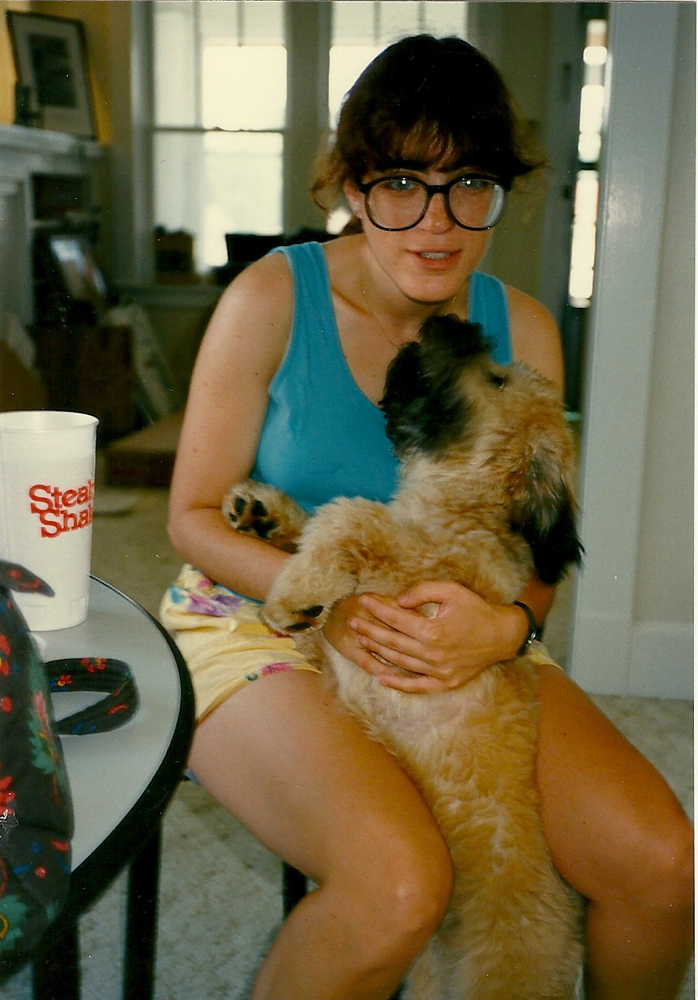
So today I saw my mother and she gave me some pictures she had found that she thought I might want. The one of my long-departed cat I appreciated. This one, not so much.
I think this would have been around 1989 and when I saw it all I could see was the glasses. Holy cow. What was I thinking?
It’s funny how much more public the fashion sins of our past are since the advent of the Internet. Once upon a time, no one would have known about my enormous glasses but me. I could have thrown out that picture and forgotten that phase. But now there’s a public record of the ridiculousness.
Do you have pictures of yourself that shock you when you see them?